


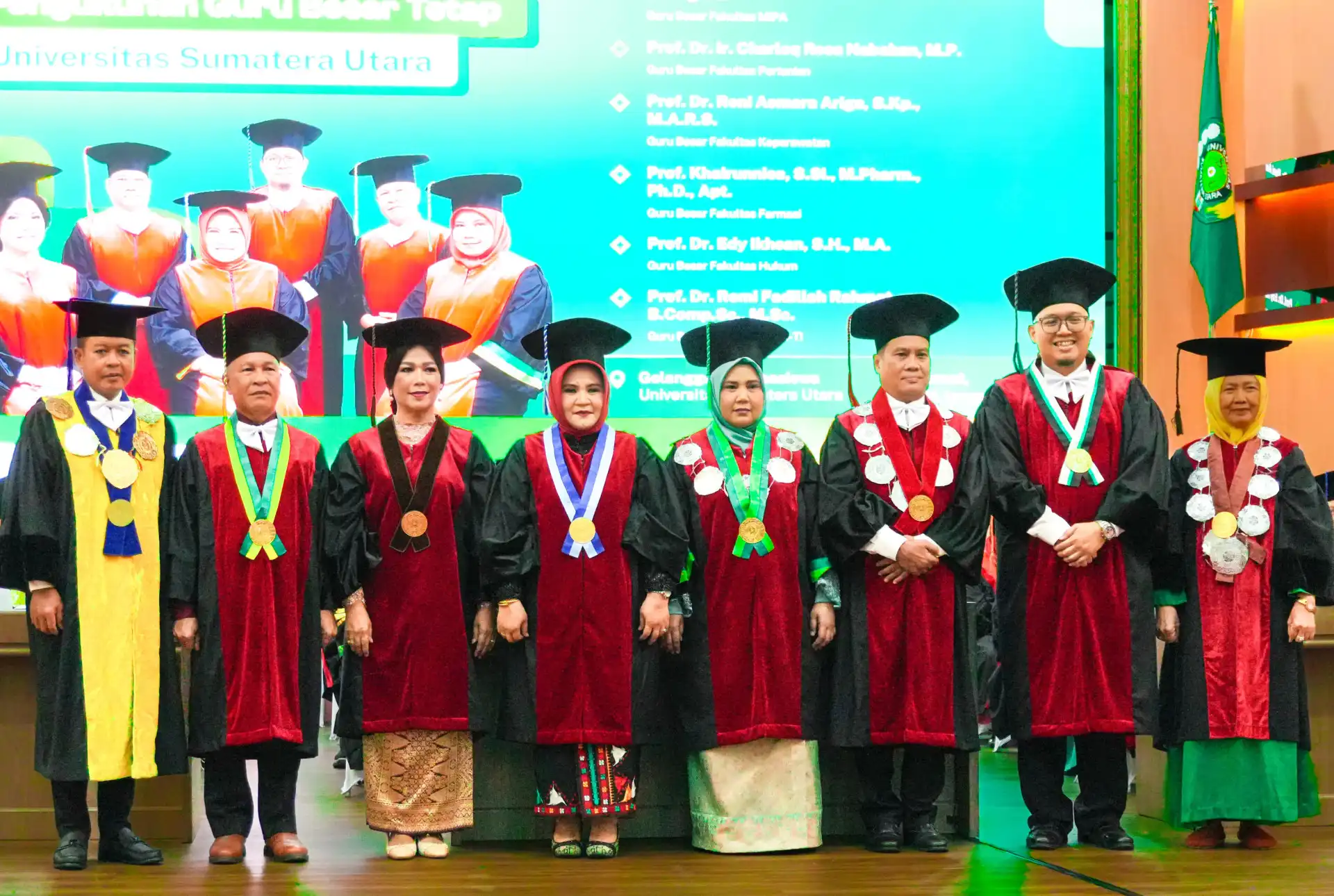
PUBLIC RELATIONS FMIPA – The Rector of Universitas Sumatera Utara (USU), Prof. Dr. Muryanto Amin, S.Sos., M.Si., officially inaugurated a Full Professor from FMIPA at the USU Student Hall on Friday (24/01/2025), namely Prof. Dr. Drs. Kerista Tarigan, M.Eng.Sc., from the Physics Study Program in the field of Electronic Materials Technology.
The inauguration ceremony was attended by the USU Rector and his team, the Board of Trustees, the Academic Senate, Professors, Deans and Vice Deans within USU, lecturers, academic staff, and invited guests, including family, colleagues, and students.
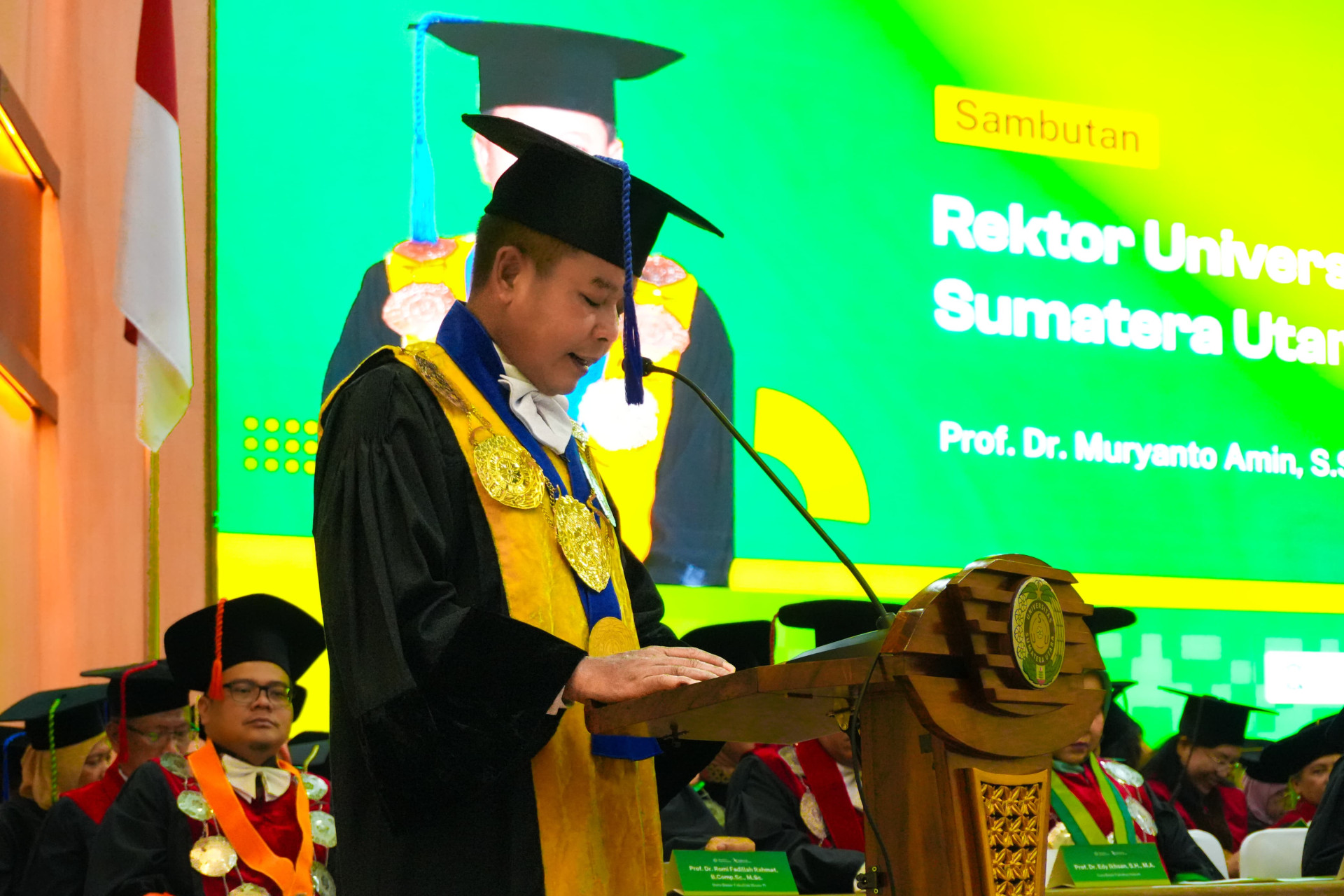 |
In his speech, the USU Rector expressed his appreciation to the newly appointed Professors for their contributions to advancing the university, particularly in academics, research, and community service. He also stated that during the 2024–2025 period, USU has officially appointed a total of 52 Full Professors. This achievement marks a strategic step in improving the quality of education within the university. Furthermore, Professors are expected to maintain high standards and excellence in their respective fields.
The Rector further emphasized the need for adaptation to the rapidly evolving global landscape. Therefore, future research must align with global dynamics and technological advancements.
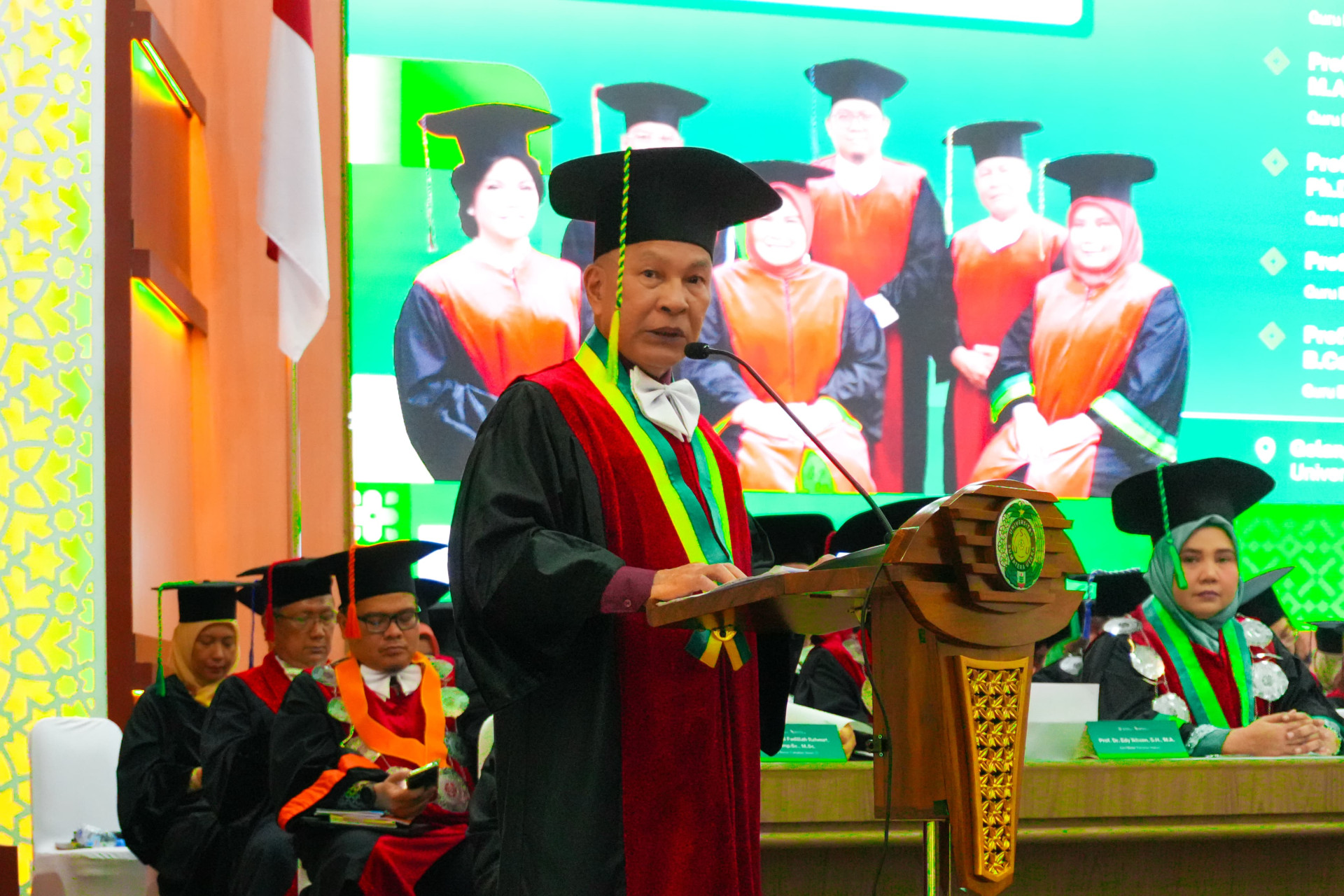 |
On this occasion, Prof. Dr. Drs. Kerista Tarigan, M.Eng.Sc., delivered his inauguration speech titled The Role of Physicists in the Development of Electronic Materials Technology Based on Biomass Waste in the Future. In his speech, he highlighted a major challenge in graphene development—graphene does not occur naturally and must be synthesized. One alternative method is using biomass from agricultural waste, plastic waste, and other sources.
Graphene is a two-dimensional, single-layer carbon material with a hexagonal lattice of sp² hybridized carbon atoms, an interlayer spacing of 0.335 nm, and a conjugated electron system overlapping at a single-atom thickness. Graphene can be synthesized through the pyrolysis of biomass. However, biomass-derived graphene generally has low conductivity, requiring doping processes to enhance its conductivity beyond that of copper.
Based on XRD characteristics and analysis, a broad and weak peak at 2θ = 23.32° for GNS confirms successful synthesis. FTIR results indicate that nano-layered graphene electrodes with Ni exhibit increased surface area and conductivity. Additionally, the mass ratio in the Ni/GNS and GNS compositions enhances the electrical power efficiency of the electrodes. Consequently, biomass—especially coconut shells—shows great potential as an electrode material compared to commercial electrodes in primary batteries. In the future, this material can be further developed in the energy, battery, construction, biomedical, and other sectors.
At the conclusion of his speech, Prof. Dr. Drs. Kerista Tarigan, M.Eng.Sc., expressed his heartfelt gratitude to his family for their unwavering support. He specifically thanked his late father, Nampe Tarigan Sahing, and his late mother, Naik Br Sitepu, as well as his in-laws, J.U. Barus and the late P. Br Ginting, who always prayed for his career success. Special thanks were also given to his beloved wife, Ir. Juliana Br Barus, and his three children, Stefiana K. Br Tarigan, A.Md., David Inganta Pulung Tarigan, and Klarisana Br Tarigan, for their continuous support and prayers.
PUBLIC RELATIONS FMIPA