


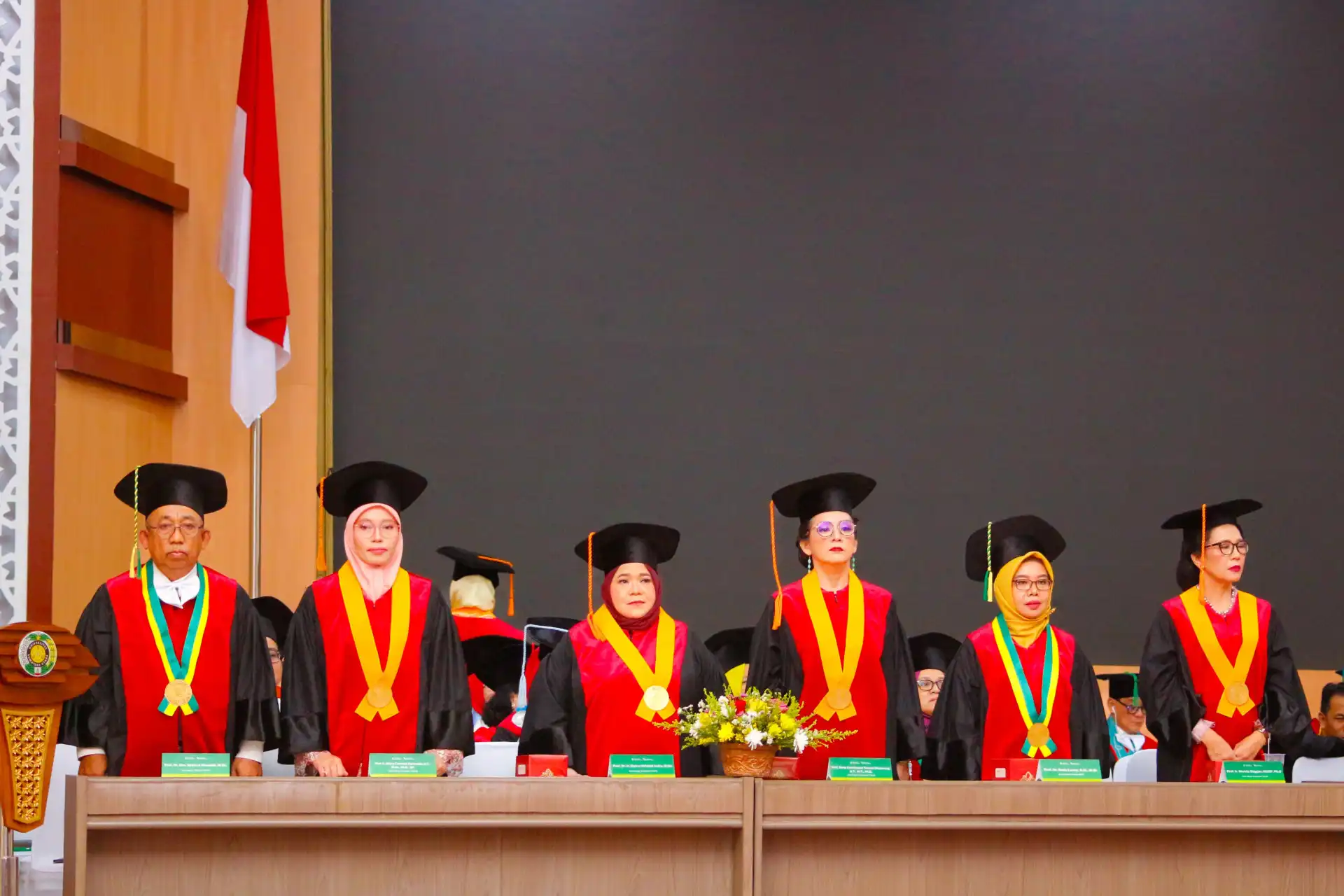
HUMAS FMIPA – The Rector of Universitas Sumatera Utara (USU), Prof. Dr. Muryanto Amin, inaugurated two permanent professors from FMIPA at the USU Student Center on Tuesday (25/02/2025). They are Prof. Dr. Drs. Syahrul Humaidi, M.Sc., from the Physics Study Program in the field of Functional Materials/Superconductors, and Prof. Dr. Sovia Lenny, S.Si., M.Si., from the Chemistry Study Program in the field of Natural Product Chemistry and Flavonoids. The inauguration ceremony was attended by Prof. Dr. Muryanto Amin, S.Sos., M.Si., as USU Rector and his staff, the Board of Trustees, the Academic Senate, professors, deans, and vice deans within USU, lecturers, educational staff, and invited guests, including family, colleagues, and students.
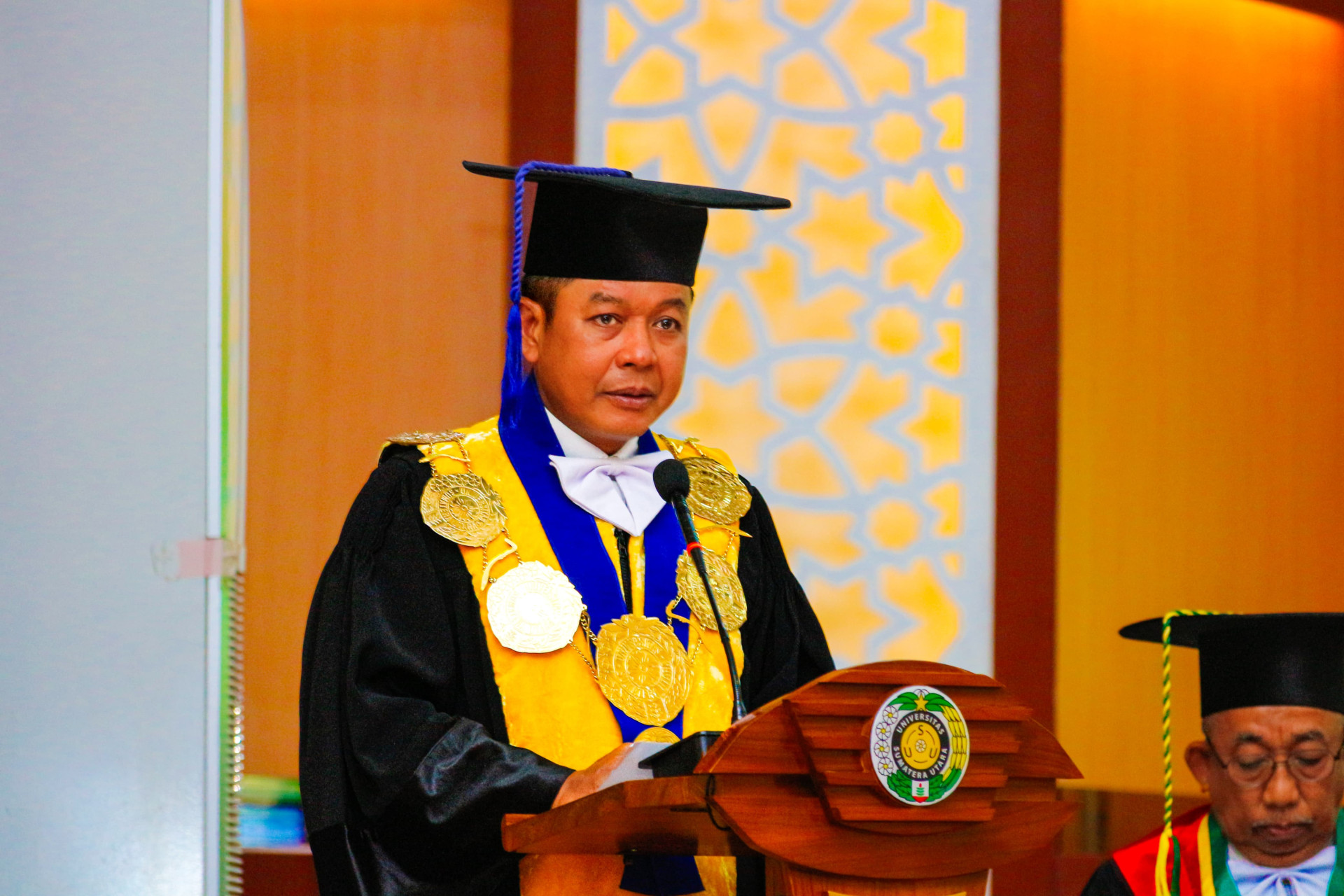 |
In his speech, USU Rector Prof. Dr. Muryanto Amin, S.Sos., M.Si., stated that this inauguration is part of USU’s significant achievement in increasing the number of professors. Since 2021, there has been an addition of 120 professors at USU. The Rector described this ceremony as a motivation to continue contributing to producing beneficial outputs of the three pillars of higher education (tridarma) that play an important role in providing solutions to societal problems. “Today’s ceremony is part of the achievement of increasing the number of USU professors. Over the past four years, there has been an addition of 120 professors. This is not just a celebration but also a reinforcement of motivation to continue contributing to producing beneficial tridarma outputs that provide solutions to societal problems,” said Prof. Muryanto Amin.
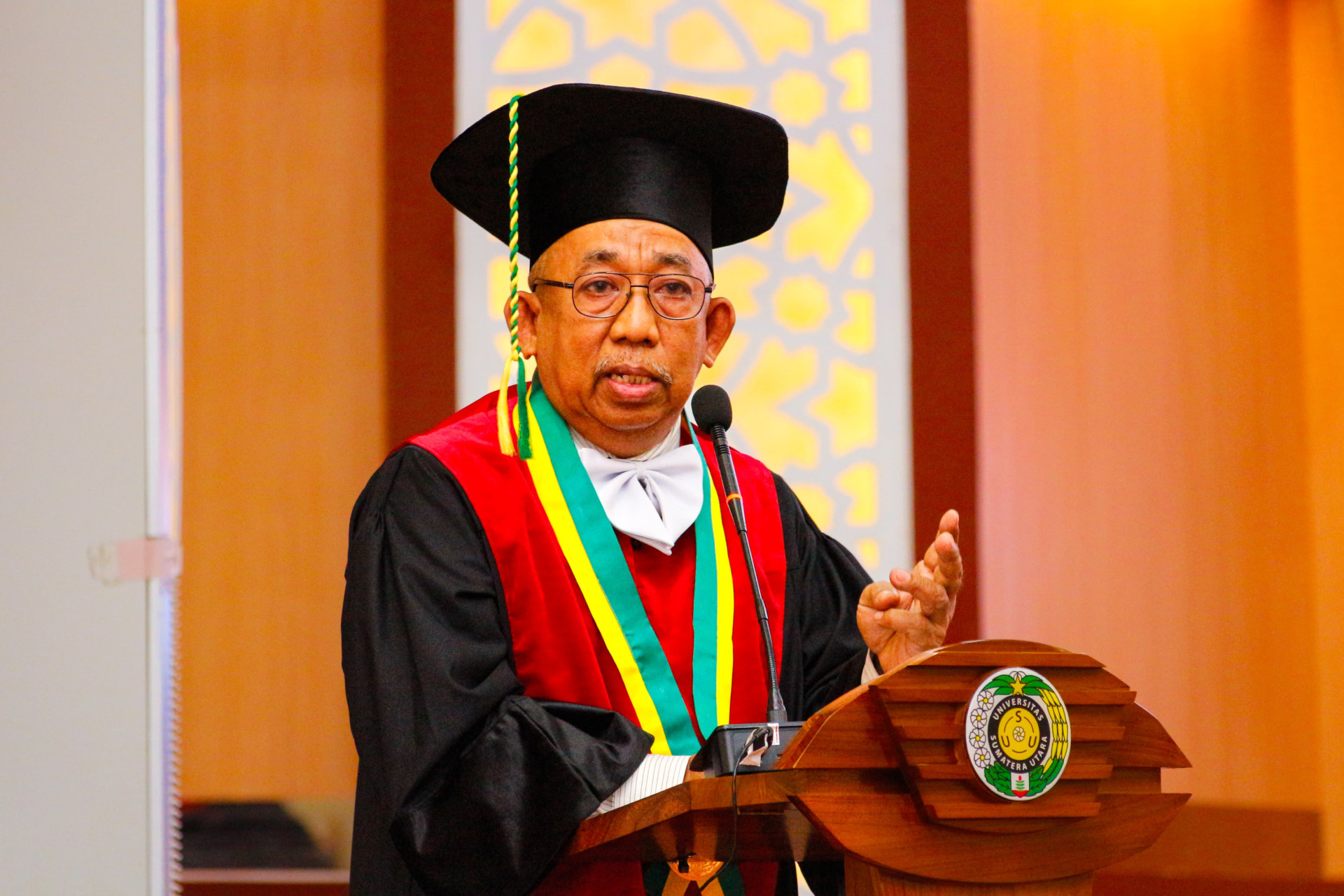 |
On this occasion, Prof. Dr. Drs. Syahrul Humaidi, M.Sc., delivered an inauguration speech titled “The Development of High-Temperature Superconductors in the Era 4.0.” In his speech, he explained that the era of the industrial revolution 4.0, which will be followed by the era 5.0, demands drastic advancements in digitalization and automation. “We need balancing steps for the supporting components of the 4.0 era, including advancements in material science. We are racing to produce advanced and highly advanced materials to anticipate developments in the 5.0 era. Research on superconducting materials must continue in the effort to find the optimum critical temperature. Further research can include searching for new base materials (precursors), new doping agents, modification of manufacturing processes, or expansion of existing methods. Another highly feasible alternative is improving the performance of existing superconducting materials. This way, the operational costs of superconducting material applications can be broader. With the discovery of higher critical temperatures, achieving near 100% efficiency is not impossible. The higher the critical temperature (hopefully approaching room temperature), the more cost-effective and efficient the operations will be in the 4.0 and 5.0 eras. Furthermore, the discovery of a new (highest) critical temperature for superconducting materials could open opportunities for a Nobel Prize in Physics in the future,” explained Prof. Syahrul.
On this joyous occasion, Prof. Dr. Drs. Syahrul Humaidi, M.Sc., expressed his gratitude to his extended family for their support in reaching the position of professor. “Special and heartfelt thanks to the two most influential people in my life, my late father, Dipauddin bin Buyung Samik bin Utu, and my late mother, Nurham Nst binti Bongsu Hamzah. Although my father’s struggle ended during the seventh semester of my undergraduate studies, all the energy and prayers he gave me have become invaluable assets. Your child will continue to strive to be a person useful to others, as you wished, father. I am proud to have had such a resilient father. I will continue to strive to make you proud, father, until the end of my life. To my mother, who always showered me with love, attention, sincerity, patience, and heartfelt prayers. Forgive me if, until the end of your life, I was unable to repay even a fraction of the milk that became my flesh and blood. May all the sweat and struggles of my father and mother become good deeds and seeds of reward in the sight of Allah SWT. I long to prostrate before you, father and mother, but only prayers can I offer. May you both be granted the best place in His presence. Amin YRA,” he said.
Prof. Syahrul also expressed his heartfelt gratitude to his beloved wife, Hj. Sri Medina, S.H., “a remarkable woman after my mother, who has always faithfully accompanied me through joy and sorrow, in prayers and tears. A special person who has been my motivation and inspiration, continuously providing encouragement and full support throughout my career and always motivating me to reach and achieve the position of professor. May our togetherness lead us to Jannah, Allah SWT’s paradise.”
To his beloved children, Abdurrasyid Aulia Rahman, S.Kom., M.Kom.; Abulkhair Asrul Abdurrahim, S.Kom.; and Achmad Yusuf Barmawi, S.Kom., Prof. Syahrul advised, “Let my achievement today be a motivation for your personal development in the future. Be individuals who are beneficial to others. Do not forget to always pray for us, your father and mother, at every opportunity. May Allah always bless our extended family in this world and the hereafter. Aamiin YRA.”
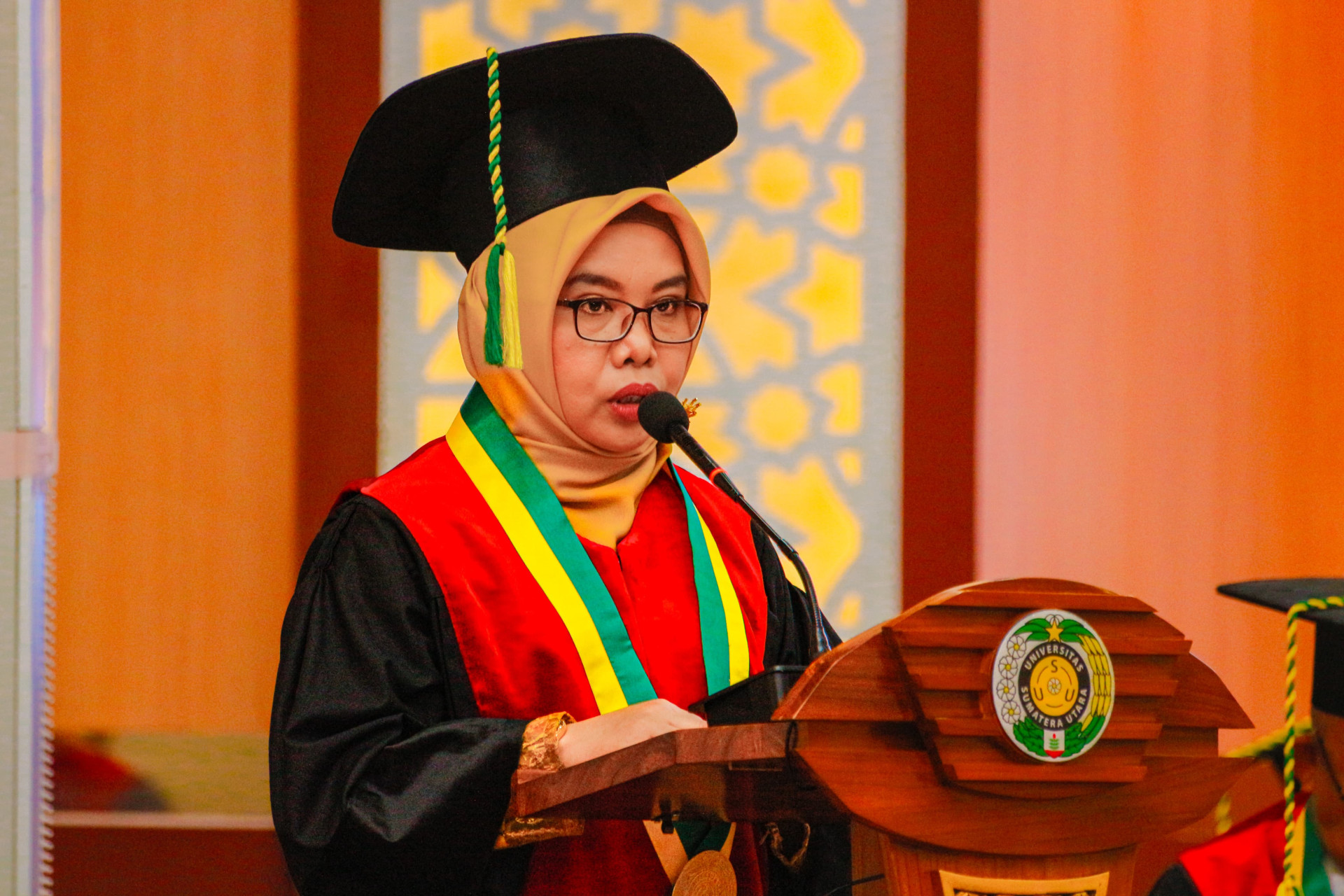 |
On the same occasion, Prof. Dr. Sovia Lenny, S.Si., M.Si., also delivered an inauguration speech titled “Flavonoid Compounds: A Natural Alternative to Prevent Degenerative Diseases.” In her speech, she explained that plant secondary metabolites, such as flavonoids, alkaloids, and terpenoids, play an important role in various applications, including pharmaceuticals, food, and industry. “These compounds have been used in traditional medicine for centuries and continue to be a valuable source for the development of new products. Flavonoid compounds are known for their ability to capture free radicals and reduce oxidative stress, which is a major factor in the development of degenerative diseases such as heart disease, diabetes, and cancer. By reducing oxidative damage to cells, flavonoids can help slow down the degeneration process and protect cells from damage that can lead to various diseases, including cardiovascular diseases and cancer,” explained Prof. Sovia.
Prof. Sovia added, “Flavonoid compounds have great potential as nutraceuticals in the prevention and treatment of degenerative diseases, thanks to their antioxidant mechanisms, heart-protective effects, positive impacts on brain health, and role in reducing inflammation. Primary sources of flavonoids include fruits (such as oranges, apples, and berries), vegetables (such as onions, broccoli, and tomatoes), tea (especially green tea), and grapes. Therefore, it is important to maintain flavonoid intake in daily diets to maximize their benefits.”
Prof. Sovia expressed her deepest gratitude and special tribute to her late father, Mukarramin, and late mother, Rabiah Jamil. “Their boundless love, attention, sincerity, patience, and heartfelt prayers paved the way for me in building my career and always seeking
HUMAS FMIPA